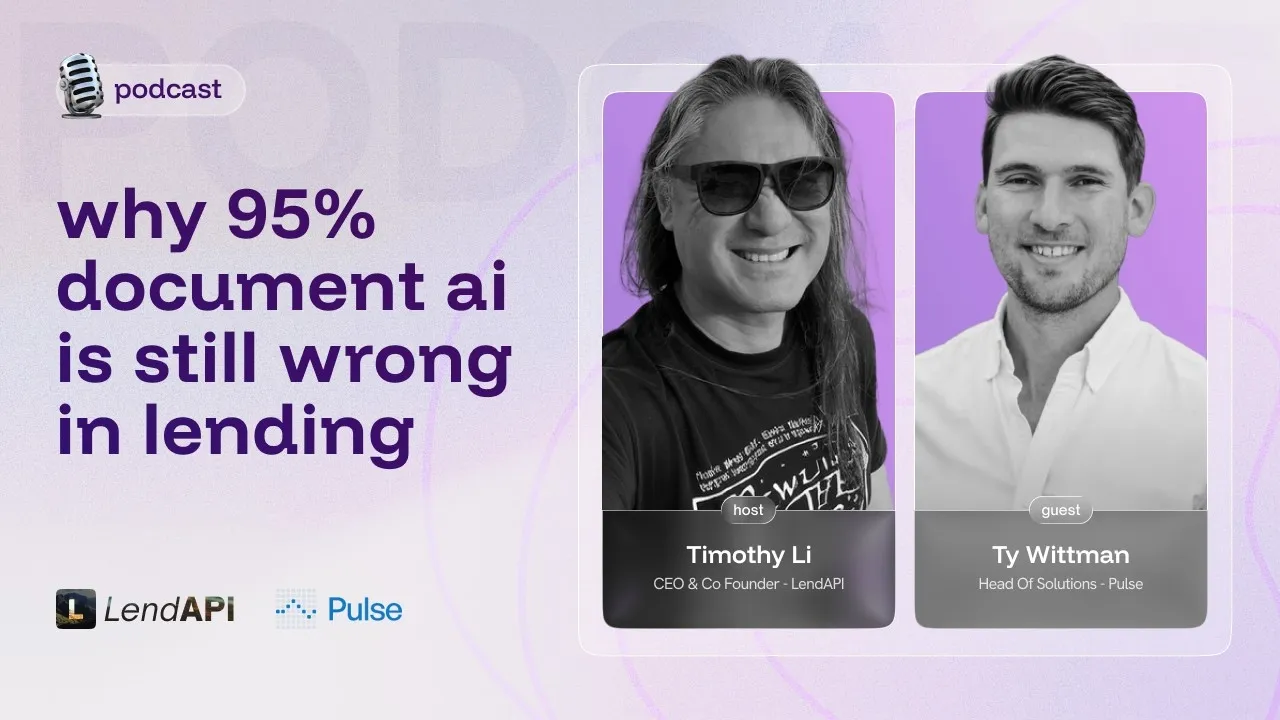
In this episode, host Timothy Li (CEO, LendAPI) talks with Ty Wittman of Pulse about why banks still read documents by hand, why template-based OCR was never going to solve it, and what it takes to extract data from a commercial loan packet with confidence a credit committee can actually trust.
Ty grew up in Iowa, studied computer science, and fell into banking through an IT role at a local bank, working alongside the nCino, Salesforce, Q2, and Temenos ecosystems before landing in document AI. He and Tim cover why legacy cores persist, how vision language models read documents the way a human does, and why unstructured documents may hold 60-70% of a company's data.
What You'll Learn:
Why banks stay on legacy systems: reliability, security, auditability, and trust matter more than novelty
Why consumer lending automates first while $30M+ commercial deals still depend on manual reading and spreading
How vision language models replace brittle OCR templates by understanding layout, footnotes, handwriting, scans, charts, and tables
Why "95% accurate" isn't accurate in lending, and why every extracted value needs a confidence score and a traceable source (page, table, cell)
How cross-page context catches conflicts, like income figures on one page and adjustments three pages later
Why the same approach reaches oil and gas well logs, mineral rights records, and data center construction financing
Why AI-generated bank statements and forged checks are now a real risk, and why document provenance and metadata matter
Why specialized, contextual models in financial services beat a general LLM with no domain knowledge
About Pulse
Pulse is a document AI platform that extracts structured, auditable data from complex financial documents with field-level confidence scores and source traceability, built for regulated industries like banking and lending. Pulse is a partner on the LendAPI Marketplace.
Learn more: https://runpulse.com
Explore the LendAPI Marketplace: https://www.lendapi.com/marketplace
Listen on YouTube, Spotify & Apple Podcasts