v3.2.2 is about giving you more control over every layer of the platform — how workflows run, how data is structured, how applications are tracked, and which partners you can bring in. Flow Builder gets parallel execution and smarter testing. Model Studio adds structured JSON variables. Application stages are now yours to define. And the partner ecosystem grows with CLEAR, LoanPro, and Figure AI.

Run parallel branches in Flow Builder
New feature: Fan out, execute simultaneously, converge cleanly
The parallel run node is one of the most-requested additions to Flow Builder, and it's exactly what it sounds like: fan out to multiple branches at once, let them all run simultaneously, and continue once every branch completes.
The practical impact is significant. Before this, any workflow that needed multiple integrations — pulling credit from two bureaus, running identity and income verification side-by-side, firing multiple notifications at the same moment — had to chain them sequentially. Each step waited for the one before it. With the parallel node, those steps run at the same time and the flow only proceeds once all results are in.
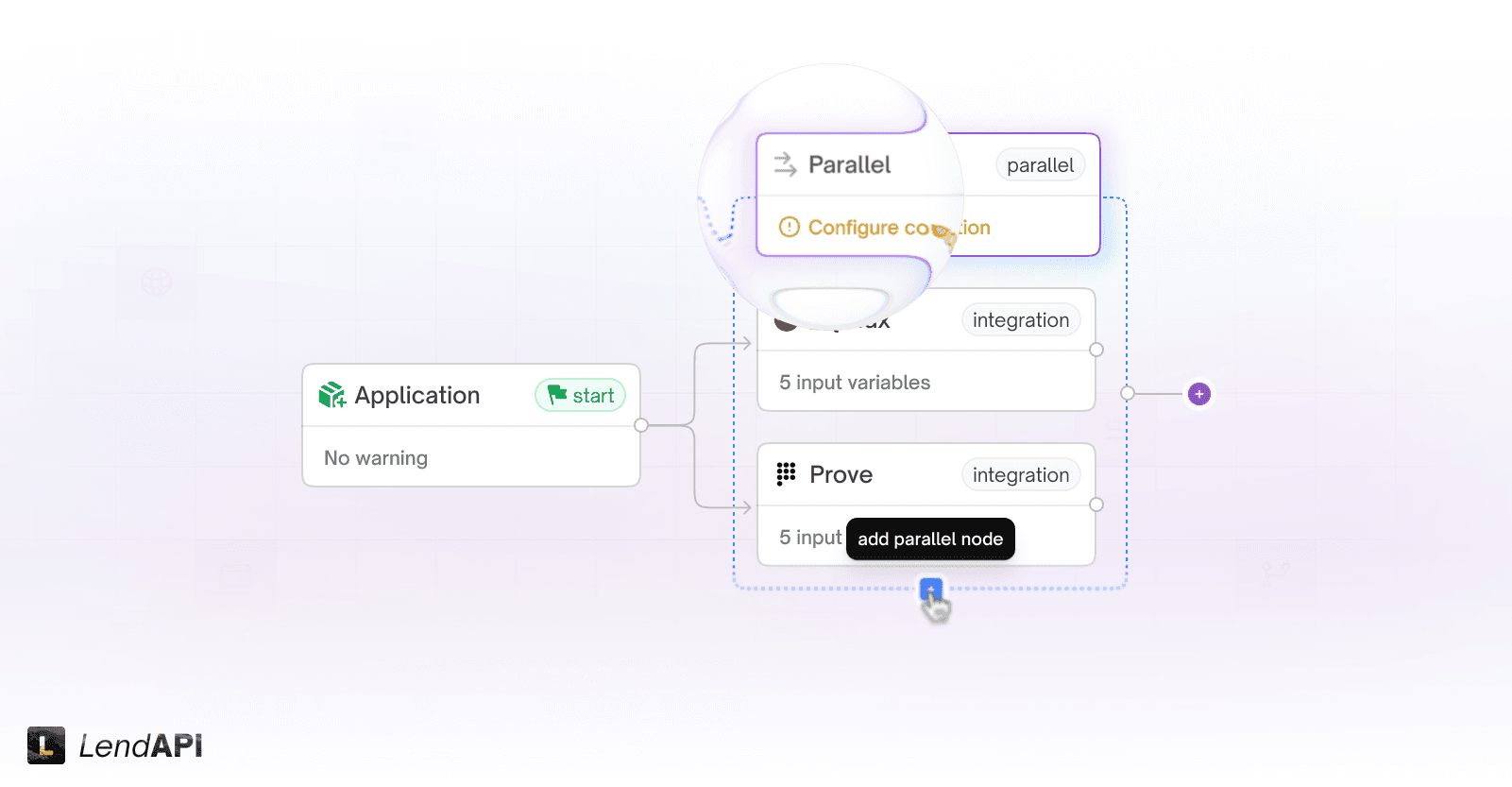
Building a parallel group is straightforward: drop a parallel node on the canvas, use the add parallel node button to add branches, and wire integrations or logic into each branch independently. Each branch shows its own configuration — number of input variables, integration type, connection state — so you can audit the group without opening each node individually. The canvas keeps it visually grouped with a dashed boundary, making the parallel block easy to spot in a complex flow.
For lenders where underwriting latency matters — and it always does — replacing sequential chains with parallel branches is a direct win.

Structured JSON variables in Model Studio
New feature: Assemble your variables into structured data
Model Studio has a new JSON variable type. Instead of passing individual scalar variables one at a time to an integration, you can now assemble them into a structured JSON object — or an array of up to 10 such objects — and send that payload as a single variable.
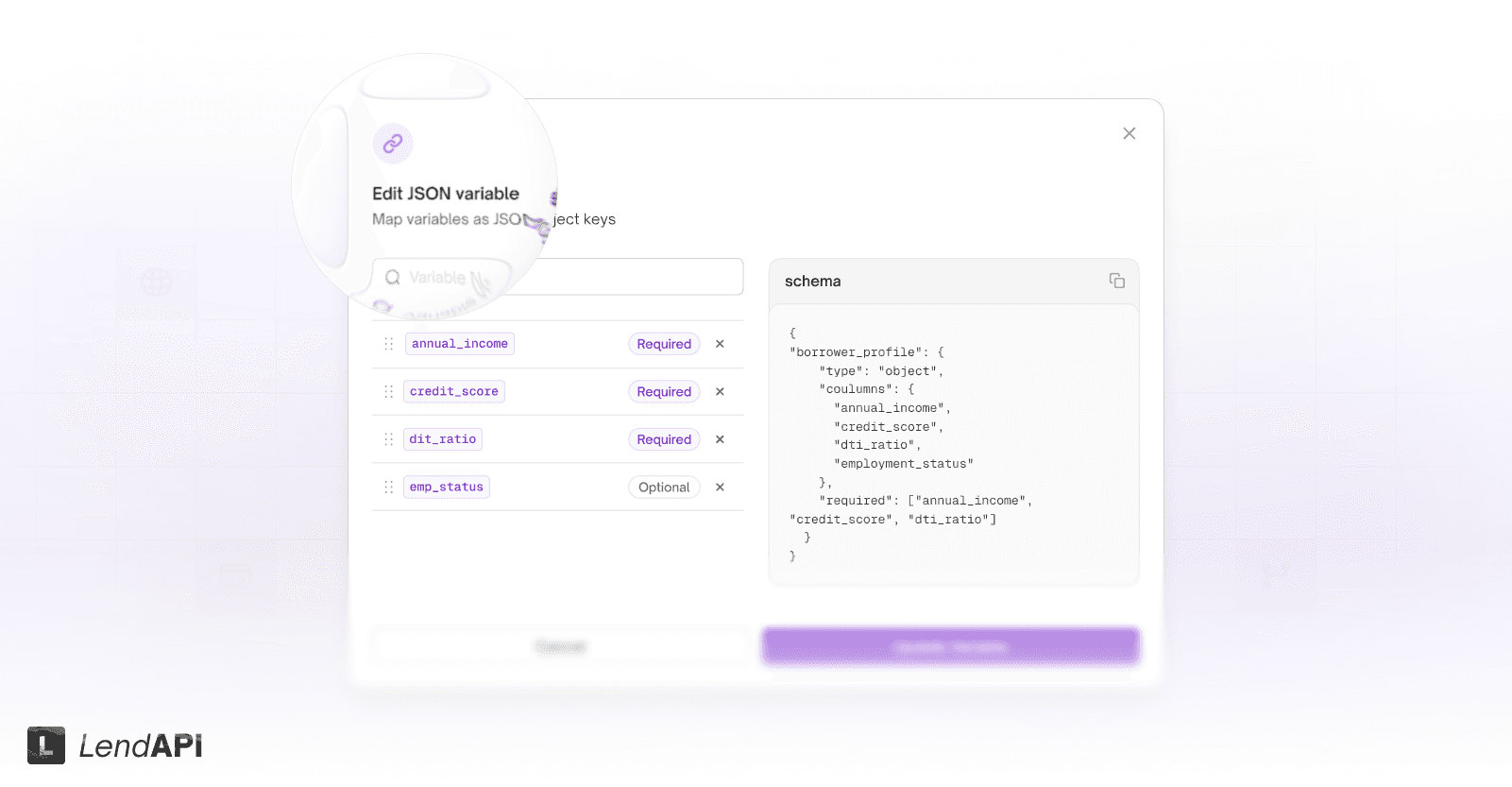
The editing experience is clean. You pick the scalar variables you want to include (annual_income, credit_score, dti_ratio, employment_status, or whatever your schema requires), mark each as Required or Optional, and the panel on the right generates the JSON schema in real time. You can see exactly what the assembled object looks like before it goes anywhere. For array types, the same approach stacks up to 10 item templates.
This is particularly powerful when paired with Flow Builder's integration nodes: instead of mapping a dozen individual fields every time you configure an integration, you reference a single JSON variable with the right shape already built. If you later try to delete or disable a scalar variable that's mapped into a JSON key, LendAPI will warn you before anything breaks downstream.
Custom application stages
New feature: Track applications through your actual workflow
The built-in stages cover the obvious milestones, but real lending operations have intermediate states that don't map cleanly onto defaults. "Income Verified." "Offer Presented." "Pending Docs." Whatever your team calls the steps that matter internally — they can now live natively in LendAPI.
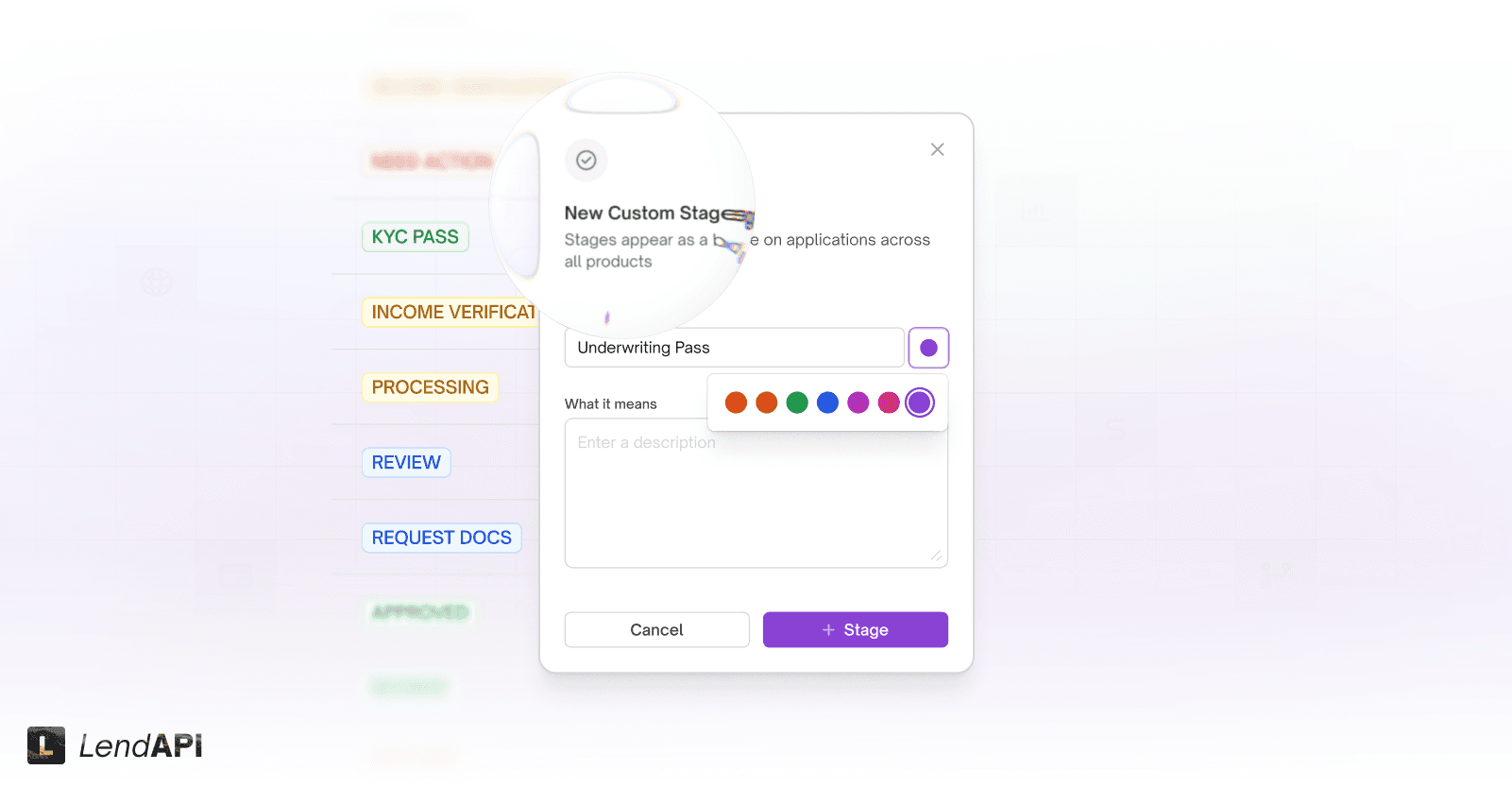
Tenant admins create custom stages with a name and a color from a curated palette. From there, they behave like first-class stages everywhere: the Agent Dashboard shows them as badges alongside built-in stages, the stage filter includes them, Product Studio page settings let you trigger stage transitions from the applicant flow, and webhook payloads carry the human-readable label — so your CRM or back-office system sees exactly what's happening without any mapping layer.
Custom stages are set at the parent-tenant level and flow down to subtenants automatically. Once a stage is in use on live applications, it can be renamed but not deleted — so historical records stay intact no matter how your process evolves.
New partners: CLEAR, LoanPro, and Figure AI
New integrations: More options at every layer of the stack
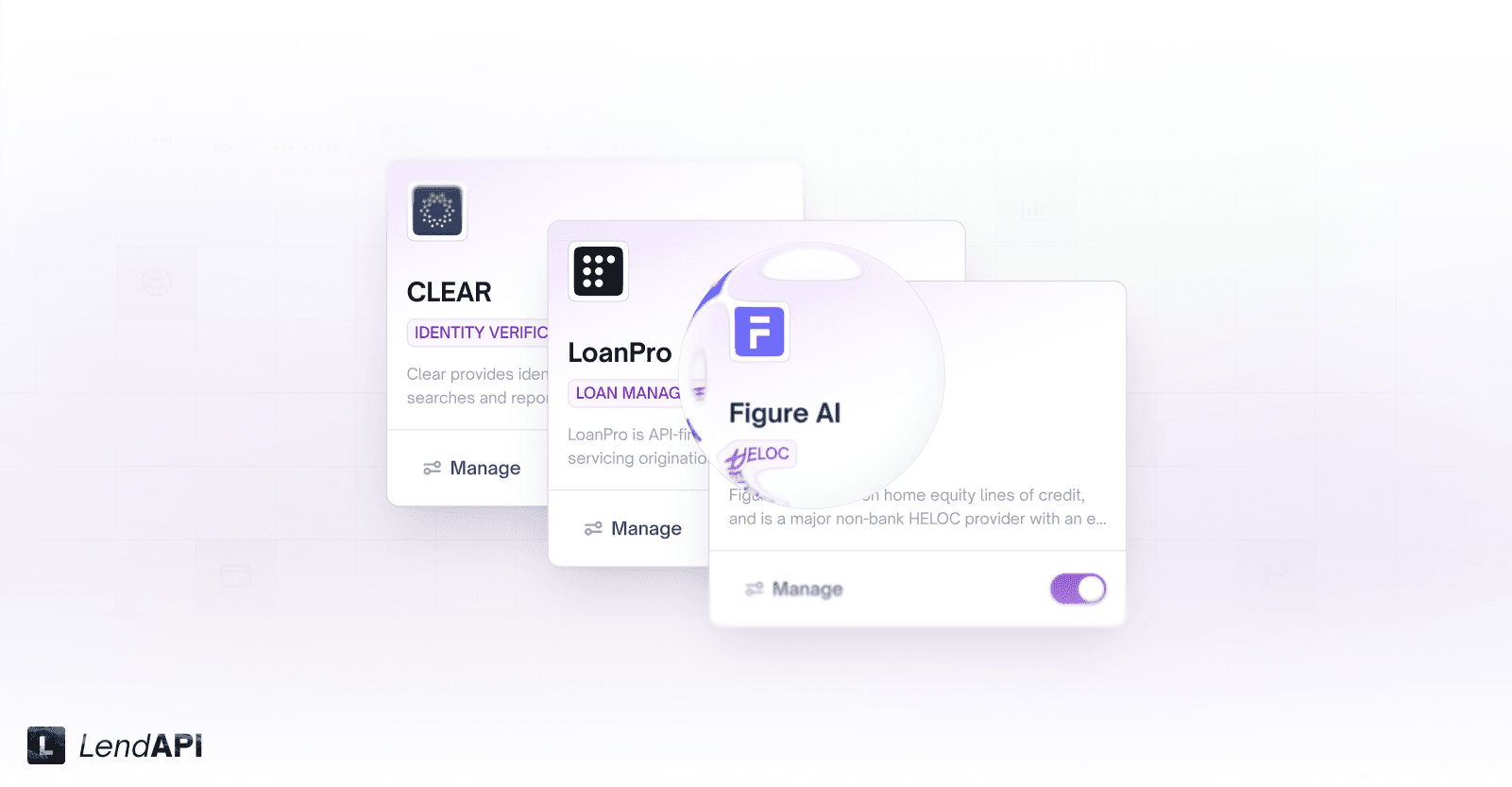
Three new partners join the LendAPI Marketplace this release, covering identity verification, loan management, and HELOC lending.
CLEAR (Thomson Reuters) adds another identity verification option to the platform, supporting both person and business searches with full risk-inform reporting. If you're looking for an alternative or supplement to your current identity provider, CLEAR is now available without any custom integration work.
LoanPro joins the Loan Management System partner lineup, giving lenders another route for syncing origination data into servicing. LoanPro is API-first and built for modern lending operations — it joins Peach, Embarc, VergentLMS, and MeridianLink SubmitLoan on the LMS roster.
Figure AI is now available as a marketplace integration for HELOC lending. Figure is a major non-bank HELOC provider, and their presence on the platform gives lenders an instant path to offer home equity lines of credit without sourcing the relationship independently.
Flow Builder test improvements
Improvement: Test against real applications, see exactly what ran
The Test Flow panel in Flow Builder now lets you select a specific application from a searchable dropdown to run your flow against. You can search by applicant or application ID, pick the exact scenario you want to validate, and get output that reflects real data from your pipeline — not synthetic test data.
This makes it significantly easier to debug edge cases. If a tenant reports unexpected behavior on a specific application, you can reproduce it directly in Flow Builder by selecting that application in the panel and running the flow.
Everything else in v3.2.2
Several more additions shipped alongside the headlined features:
Custom Python in Model Run Time — write inline Python with the requests library inside Model Studio to call your own external endpoints. Useful for lightweight integrations and one-off lookups without a full provider integration.
Multiple templates per outcome — a single Rules Studio outcome can now fire multiple email and SMS templates at once, eliminating the need to chain outcomes or duplicate templates for multi-part communications.
Platform fixes — Doc upload statuses update in place, files over 15 MB return a clear error, Embarc no longer creates duplicate customer records, state variables are migrated to a proper list type, and Doc AI accuracy is improved with a retrained model.
About LendAPI
LendAPI is the core infrastructure for embedded finance, known as one of the fastest-growing embedded finance infrastructure companies in the world. Since its inception in 2024, the platform has provided market leadership in indirect financing across industries ranging from automotive and marine equipment to luxury consumer goods and services. Our technology enables a variety of indirect lending scenarios, delivering millions of financing opportunities for banks, credit unions, retailers, and fintechs. LendAPI provides a complete, private-labeled solution, from customer experience and administrative tools (including in-store co-pilots) to loan servicing, compliance, and licensing support, to launch in-house BNPL products quickly and efficiently