Behind the modern landscape of high-yield savings accounts, low-friction mobile apps, and national ATM networks lies a distinctly American historical movement: grassroots cooperative finance. Before credit unions became multi-billion-dollar financial institutions managing tens of billions in asset reserves, they were humble, hyper-focused savings clubs organized by tight-knit workforces.
Alliant Credit Union, RBFCU (Randolph-Brooks Federal Credit Union), Suncoast Credit Union, and First Tech Federal Credit Union represent four distinct pillars of this movement. Across commercial aviation, military service, public education, and Silicon Valley technology, each institution was built to solve a hyper-specific financial problem for a precise community.
Here is the complete story of their humble origins, strategic evolutions, community investments, and fintech-driven races for future membership.

Common Threads: The DNA of Modern Financial Cooperatives
Despite serving vastly different populations, from flight crews in Chicago to software engineers in Silicon Valley, these four powerhouses share core structural traits that separate them from traditional commercial banks:
1. Humble Origins in Hyper-Specific Workforces
None of these institutions started with massive capital reserves. Each began in the mid-20th century as a localized response to traditional banks denying basic, fair financial access to working-class professionals:
Alliant (1935): Founded by 12 United Airlines employees in Chicago.
RBFCU (1952): Founded by 9 military/civilian personnel at Randolph Air Force Base with $45 in total deposits.
Suncoast (1934): Founded by Hillsborough County schoolteachers during the height of the Great Depression.
First Tech (1952): Founded by early technology workers at Hewlett-Packard and Tektronix.
2. High-Trust Specialization to Universal Scale
Each credit union built its core operations around the distinct financial rhythms of its founding members, matching loan terms to teacher summer break cycles, military deployment timelines, or tech equity vesting schedules. Over time, as federal charter rules relaxed, all four leveraged their high-trust reputations to expand fields of membership statewide or nationwide through select employer groups (SEGs), community charters, and strategic partner foundations.
3. "Member-Owner" Capital Efficiency
Because credit unions are owned by their depositors rather than external stock investors, profits are returned as higher deposit yields, lower loan rates, and reduced fees. All four institutions have consistently channeled this structure into distinct competitive advantages, whether that means industry-leading interest rates on digital savings, hyper-localized community giving, or specialized loan underwriting.
Complete Credit Union Deep Dives
Alliant Credit Union: From Airplane Hangars to Digital-First Giant

Founded as United Airlines Employees CU - 1935
Twelve United Airlines workers pool savings in Chicago to provide fair personal loans to aviation workers.
Rebranded to Alliant Credit Union - 2003
Diversified beyond its original corporate sponsor to include Select Employer Groups and non-profit partners.
Complete Digital Transformation -2020
Decommissioned all physical branch locations to become a 100% digital, branchless financial cooperative.
History & Evolution
Alliant Credit Union began in Chicago in 1935 when 12 United Airlines employees banded together to offer low-cost loans and safe savings accounts to pilots and ground crews. Operating as United Airlines Employees’ Credit Union for nearly seven decades, its physical footprint expanded alongside major airport hubs. By 2003, recognizing the need to reduce reliance on a single corporate sponsor, the organization rebranded to Alliant Credit Union. The pivotal turning point in Alliant’s modern history occurred in 2020, when the board executed a radical strategic pivot: closing all physical branches and transitioning into a 100% digital-first financial institution.
Acquisition Strategy & Membership Expansion
Unlike regional peers that rely on buying community banks, Alliant has grown almost entirely through organic digital expansion and non-profit partner inclusions:
Mergers & Absorptions: Instead of purchasing whole bank assets, Alliant selectively absorbed smaller corporate credit unions and Select Employer Groups (SEGs) connected to corporate partners.
Nationwide Membership Gateway: By partnering with non-profit foundations like the Foster Care to Success Foundation, Alliant unlocked a legally sound nationwide membership pathway without building brick-and-mortar locations.
Philanthropy & Community Engagement
With no physical branches, Alliant channels its philanthropic efforts through the Alliant Credit Union Foundation, focusing heavily on digital equity, financial education, and foster youth:
Digital Inclusion Initiatives: Funding broadband access, hardware provision, and digital literacy in underserved urban and rural communities.
Financial Literacy Grants: Partnering with organizations like Operation HOPE to provide free financial counseling and education toolkits nationwide.
Fintech Adoption & Competitive Edge
As a branchless cooperative, fintech isn't an add-on for Alliant, it is the primary operating mechanism:
Core API Architecture: Rebuilt on API-first infrastructure that integrates third-party fintech platforms for instant account opening, identity verification, and automated loan underwriting.
Yield Engine: Reinvests millions saved from branch real estate, utilities, and staffing back into top-tier deposit yields (high-yield savings and CDs) to acquire digitally native, tech-forward members across the country.
RBFCU: The Military Bedrock of Texas Finance
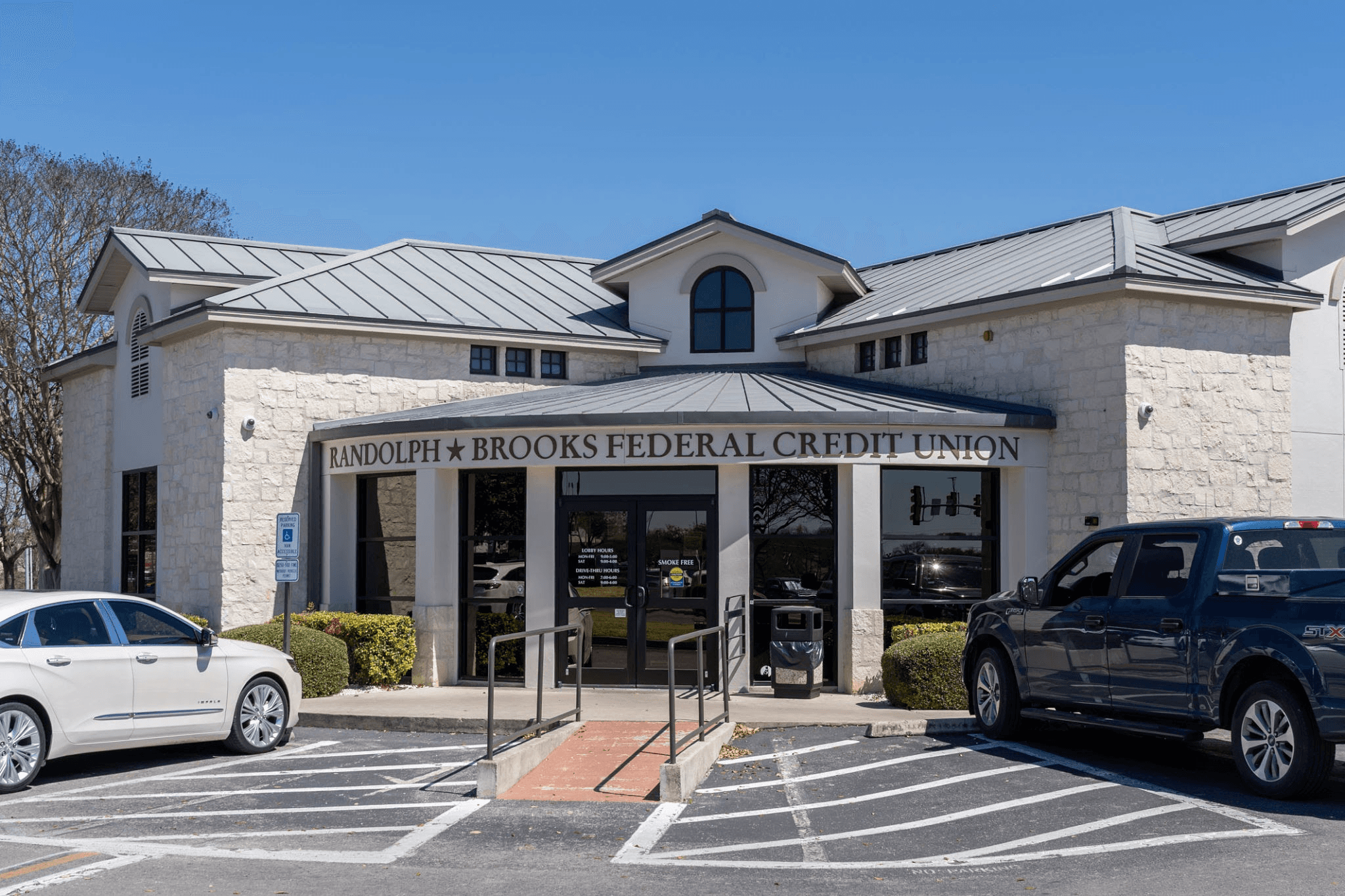
Founded at Randolph Air Force Base - 1952
Nine military and civilian personnel pool $45 to establish Randolph Federal Credit Union.
Brooks AFB Expansion & Rebrand - 1959
Expands field of membership to Brooks Air Force Base, adopting the name Randolph-Brooks FCU.
Early Self-Service Tech Pioneer - 1977
Launches 'Totie Teller' automated networks, setting a benchmark for early self-service technology in Texas.
History & Evolution
RBFCU’s story began at Randolph Air Force Base near San Antonio in September 1952, when nine military and civilian personnel pooled $45. In 1959, the credit union expanded to serve nearby Brooks Air Force Base, officially becoming Randolph-Brooks Federal Credit Union. Over the decades, RBFCU weathered severe tests, including a catastrophic 1954 fire that destroyed its original headquarters and financial logs, to become an anchor of financial stability for military families and defense workers across Texas.
Acquisition Strategy & Expansion
RBFCU’s scale (surpassing $19 billion in assets) has been driven by a hybrid model of strong organic regional market penetration and targeted credit union mergers:
Geographic Expansion: Expanded along the Texas I-35 corridor, scaling from San Antonio into Austin, Dallas-Fort Worth, and Corpus Christi.
Strategic Credit Union Mergers: Merged with smaller Texas credit unions struggling with compliance or technology costs, absorbing their field-of-membership charters to build dense branch footprints in high-growth Texas sub-markets.
Philanthropy & Community Engagement
RBFCU’s philanthropic strategy is anchored in military support and local Texas community development:
Military & Veteran Support: Direct funding for military family support networks, base initiatives, veteran transition housing, and active-duty family emergency funds.
Local Education & Health: Millions donated to local Texas food banks, public school districts, and children’s hospitals, paired with employee-driven volunteerism programs.
Fintech Adoption & Competitive Edge
RBFCU balances deep physical community presence with aggressive digital modernization:
Early Tech Legacy: Built an early legacy of innovation, deploying early automated teller networks ("Totie Teller") in 1977 and voice-response phone banking in the 1980s.
Modern Point-of-Sale Fintech: Partnered with modern digital banking platforms and fintech loan origination engines to offer instant auto-loan approvals at dealer points of sale.
Omnichannel Model: Utilizes digital tools to handle routine transactions while reserving physical branches for high-touch advisory services like mortgages, business lending, and financial planning.
Suncoast Credit Union: Empowering Florida's Educators and Communities

Teachers Union Formed - 1934
Nine educators found Hillsborough County Teachers Credit Union during the Great Depression.
Rebranded to Suncoast - 1975
Broadened charter across Florida's Gulf Coast, changing name to Suncoast Schools Federal Credit Union.
Bank M&A Expansion Era - 2010s-Present
Pioneered credit-union-to-bank acquisitions to accelerate statewide expansion across Florida.
History & Evolution
Suncoast was born out of crisis in 1934 as Hillsborough County Teachers Credit Union, organized by educators who needed a cooperative mechanism to deposit savings and secure small personal loans when commercial banks refused them service. As public education expanded across Florida’s Gulf Coast, the credit union broadened its scope to encompass higher education staff, students, and family members, eventually rebranding to Suncoast Credit Union.
Acquisition Strategy & Expansion
Suncoast is Florida’s largest credit union (over $18 billion in assets) and has been a pioneer in using bank acquisitions alongside organic branch growth:
Bank M&A Leadership: Suncoast was among the early credit unions to directly acquire whole commercial banks in Florida, buying bank assets to quickly expand its presence across south and central Florida.
Community Charter Expansion: Converted to a community charter model covering dozens of Florida counties, allowing anyone who lives, works, or attends school in those regions to join.
Philanthropy & Community Engagement
Philanthropy is built into the fabric of Suncoast’s day-to-day operations:
Suncoast Credit Union Foundation: A non-profit dedicated to benefiting children in the communities served by the credit union. The foundation has raised and distributed tens of millions of dollars toward education, health, and emotional well-being initiatives.
Micro-Funding via Transactions: Every time a member uses their Suncoast debit or credit card, the credit union contributes a portion of the transaction fees directly to the Foundation to fund local school grants and scholarships.
Fintech Adoption & Competitive Edge
Suncoast actively blends lifestyle partnerships with advanced fintech underwriting:
AI-Driven Credit Scoring: Partnered with fintechs like Zest AI to deploy machine-learning models for credit decisioning, expanding credit access to historically underserved members while lowering default risk.
Lifestyle Ecosystems: Leverages localized digital ecosystem partnerships paired with mobile app enhancements to integrate daily consumer rewards into core banking products.
First Tech Federal Credit Union: The Financial Engine of Silicon Valley Tech

Hewlett-Packard & Tektronix Roots - 1952
Employees at HP and Tektronix independently form credit unions to serve tech industry workers.
Addison Avenue Merger of Equals - 2011
First Tech merges with Addison Avenue FCU, combining Silicon Valley and Pacific Northwest tech bases.
National Mega-Cooperative Scale - Present
Reaches over $17B in total assets serving global tech giants like Microsoft, Intel, and Google.
History & Evolution
Founded in 1952 by employees at Hewlett-Packard and Tektronix, First Tech Federal Credit Union was custom-engineered to serve tech professionals. In 2011, First Tech executed a historic merger of equals with Addison Avenue Federal Credit Union (originally founded by Hewlett-Packard employees in California), uniting the premier technology credit unions of Oregon and Silicon Valley under one national banner.
Acquisition Strategy & Expansion
First Tech’s scale is built around corporate Select Employer Group (SEG) integration and massive peer-to-peer mergers:
Corporate SEG Relationships: Onboards tech giants directly, serving as the official or preferred credit union for employees at Microsoft, HP, Intel, Cisco, Agilent, and Google.
Strategic Mega-Mergers: Continually explores large-scale, nationwide credit union combinations (such as proposing a mega-merger with DCU - Digital Federal Credit Union) to establish a mega-cooperative with nationwide reach across major tech hubs.
Philanthropy & Community Engagement
First Tech focuses its philanthropy on innovation in education, STEM programs, and community safety nets:
STEM & Tech Equity Grants: Directs funding to K-12 STEM initiatives, robotics teams, and coding bootcamps for underrepresented demographics in tech centers from Seattle to Silicon Valley.
Children's Health Support: Donates millions annually to regional children's hospitals (e.g., Lucile Packard Children's Hospital, Seattle Children's) and local food banks across major operational hubs.
Fintech Adoption & Competitive Edge
Because its membership base consists largely of software engineers, product managers, and tech executives, First Tech maintains high standards for digital capabilities:
Custom Equity Compensation Lending: Developed specialized lending platforms built to handle complex tech compensation structures, including restricted stock units (RSUs), stock options, and variable bonus structures.
Fintech Incubator Testbed: Acts as an early-stage testbed for financial technology providers, deploying automated identity verification, instant payments, and open-banking API frameworks.
Strategic Comparison Overview
Credit Union | Founded | Original Core Community | Asset Scale | Growth & Acquisition Strategy | Primary Philanthropic Focus | Fintech & Competitive Strategy |
1935 | United Airlines employees | ~$19B+ | Organic digital growth; non-profit foundation membership pathways | Digital equity, foster youth, financial literacy | Pure digital branchless model; passes overhead savings to top-tier savings yields | |
1952 | Randolph Air Force Base personnel | ~$19B+ | Regional Texas branch expansion & credit union M&A | Military families, local Texas education & health | Early tech pioneer; hybrid digital + dense regional branch network | |
1934 | Hillsborough County educators | ~$18B+ | Commercial bank acquisitions + county community charters | Children's health, school grants via card-linked giving | AI credit scoring (Zest AI); mobile lifestyle ecosystem | |
First Tech FCU | 1952 | HP & Tektronix workers | ~$17B+ | Corporate SEG partnerships + peer mega-mergers | STEM education, tech equity, children's hospitals | Custom RSU/equity compensation lending; open-banking APIs |
The Future of Cooperative Banking: Scaling Purpose Without Losing Soul
As Alliant, RBFCU, Suncoast, and First Tech continue to redefine modern finance, their evolution proves that member-owned cooperatives can compete directly with Wall Street megabanks without abandoning their founding missions. Whether by eliminating physical branches to maximize deposit rates, acquiring traditional commercial banks to expand regional density, leveraging artificial intelligence to expand fair credit access, or engineering customized lending around complex corporate stock equity, each institution has adapted its legacy to meet the demands of the digital era. Ultimately, these four credit unions show that financial scale and member-first cooperative values are not mutually exclusive, they are the dynamic foundation of the next era of American banking.
Western Regional Powerhouses: Scaling Modern Cooperative Finance
LendAPI Team
•
Perspective

Powering the Cooperative Movement: A Deep Dive into America's Top Four Mega Credit Unions
LendAPI Team
•
Perspective

Champions of the Cooperative Movement: The Top 40 Credit Unions Empowering American Communities
LendAPI Team
•
Perspective