•
We just shipped LendAPI v3.2.0, a release focused on helping lenders make better credit decisions, run smarter time‑based workflows, and tighten the last mile of contracts and communications. From tradeline controls and joint pulls to a true Delay node in Flow Builder, this release gives underwriting and product teams a lot more room to design the experience they actually want.
Smarter credit pulls and tradeline controls
New feature: Re‑pull credit, keep every version
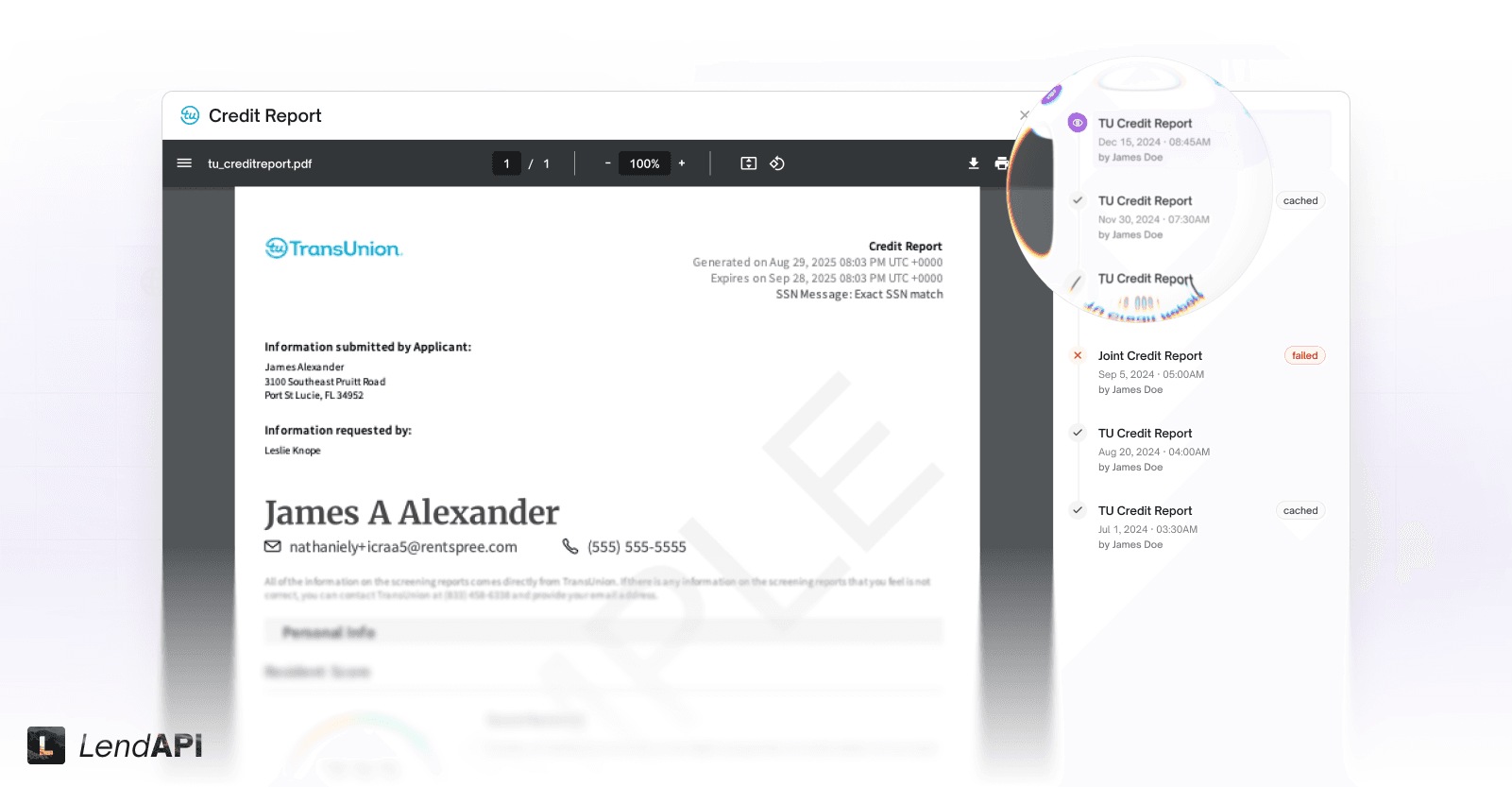
Underwriting teams can now pull credit multiple times on the same application without losing history. Every pull is stored as a version with its own status and PDF, and a new Version Control panel on the Credit Profile lets analysts move between versions with a click. The active version drives all downstream data, so switching versions will cleanly update scores, attributes, pricing, and decisions without any manual reconciliation.
This pairs naturally with the credit‑freeze handling you introduced in earlier releases: freezes, no‑hits, and lifted freezes now show up as a clean, auditable sequence instead of one overwritten record.
New feature: Dedicated Tradelines tab
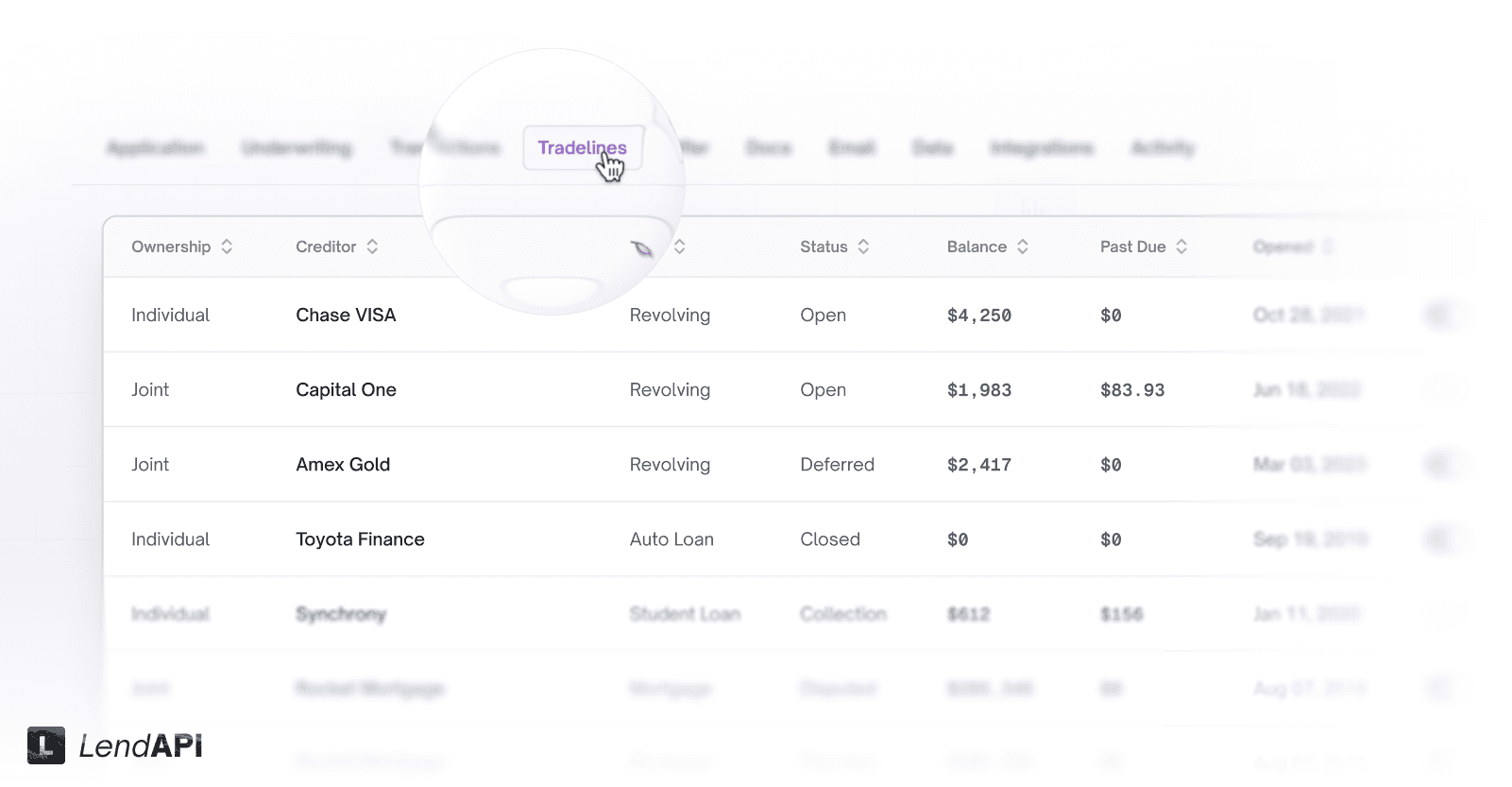
A new Tradelines tab gives those scores much more context. Ownership, Creditor, Type, Status, Balance, Past Due, and Opened date are all available in a sortable table, and each tradeline can be included or excluded from downstream calculations with a single toggle. When an underwriter excludes a tradeline, they must capture a written reason, which is stored for audit, while decisioning and pricing automatically recompute using only the included lines.
This makes it much easier to operationalize policies like “ignore small, ancient collections” or “exclude tradelines flagged as fraudulent” without building custom logic for every edge case.
Improvement: Side-by-side bureaus
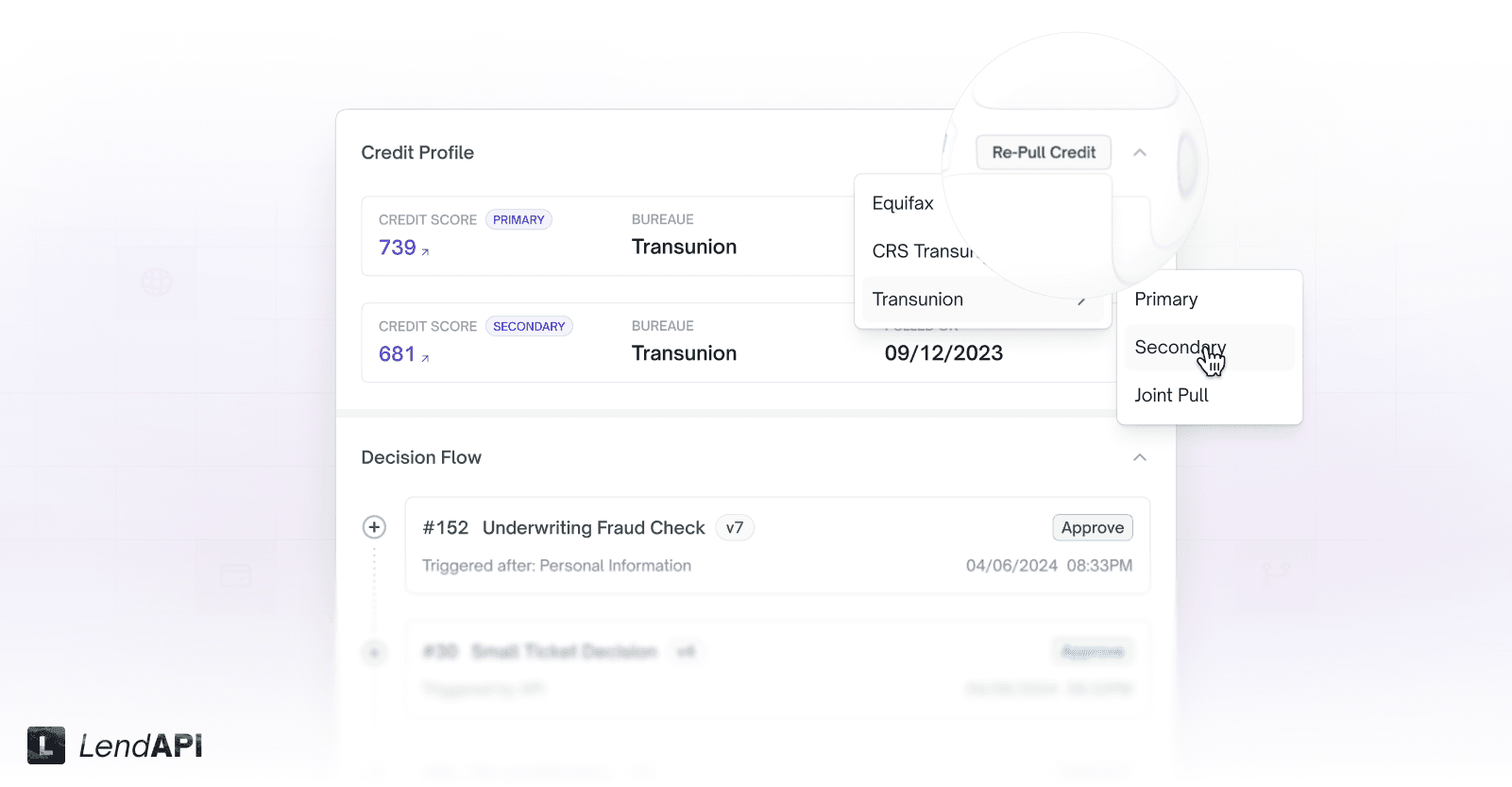
Underwriters can now see scores and reports from multiple credit bureaus side‑by‑side on the Underwriting tab, including scenarios where a bureau returns multiple scores. Configuration is flexible, so each tenant can choose which bureaus and score types to surface for their products.
Time‑based flows you can actually see and debug
New Feature: Delay node in Flow Builder
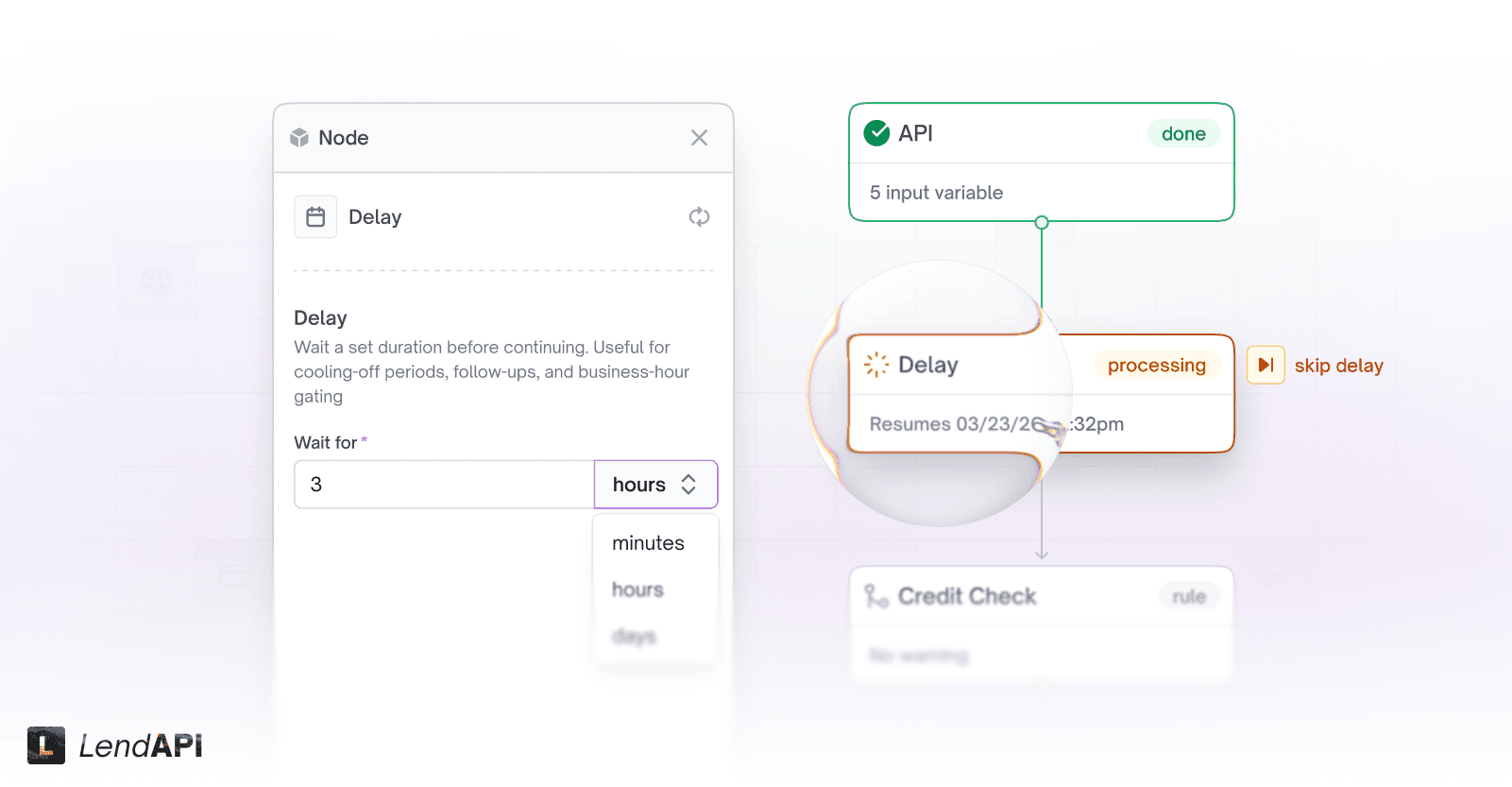
Flow Builder now supports a dedicated Delay node, so you can pause a flow for a set duration and resume it automatically—without handing control off to another system. This unlocks patterns like:
Waiting 24 hours before re‑checking a bureau or re‑pricing an offer.
Waiting a few days, then sending a reminder email or SMS if the applicant hasn’t responded.
Expiring stale applications after a cooling‑off window.
Delay supports minutes, hours, and days, so you can test with short waits in sandbox and use longer production durations once your flows are live. Each Delay node also has a configurable timeout path—if the wait exceeds your maximum threshold, the flow branches to a different exit so applications never sit in limbo.
New Feature: See exactly what happened using Flow Runs
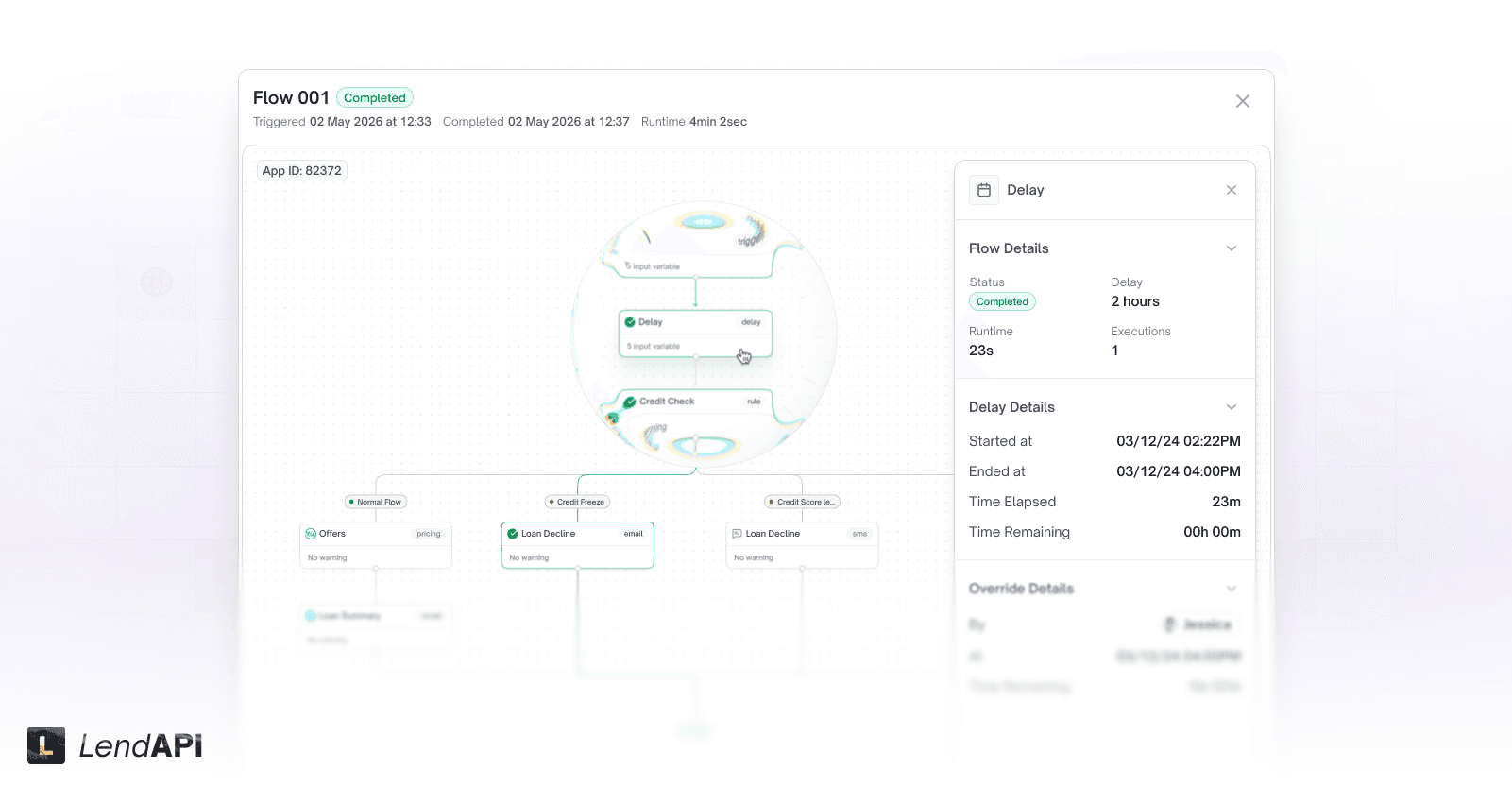
Every application detail page now includes a Flow Run link that opens an execution trace. You’ll see a mini canvas showing which nodes executed, which branches fired, and which nodes are still pending. For flows with Delay nodes, you can drill into the Delay sub‑panel to see when the flow is scheduled to resume and, if necessary, override or skip the delay for that specific application.
Admins can also suspend a flow run mid‑execution, which is particularly useful when debugging time‑based flows in production or pausing a segment during an incident. Combined with the Delay node, this gives product and risk teams full visibility into long‑running workflows, without needing to dig through logs or ad‑hoc dashboards.
While we were there, we gave the Flow Builder canvas a round of UX polish: faster node placement, inline rename, node swap (change a node type without rewiring), and a redesigned Test Flow panel. We also fixed several annoyances like first‑node connection quirks, pagination issues, and missing input CTAs so builders can move faster with less friction.
Cleaner end‑user experiences in Product Studio
Improvement: “Must Match” and a unified validation framework
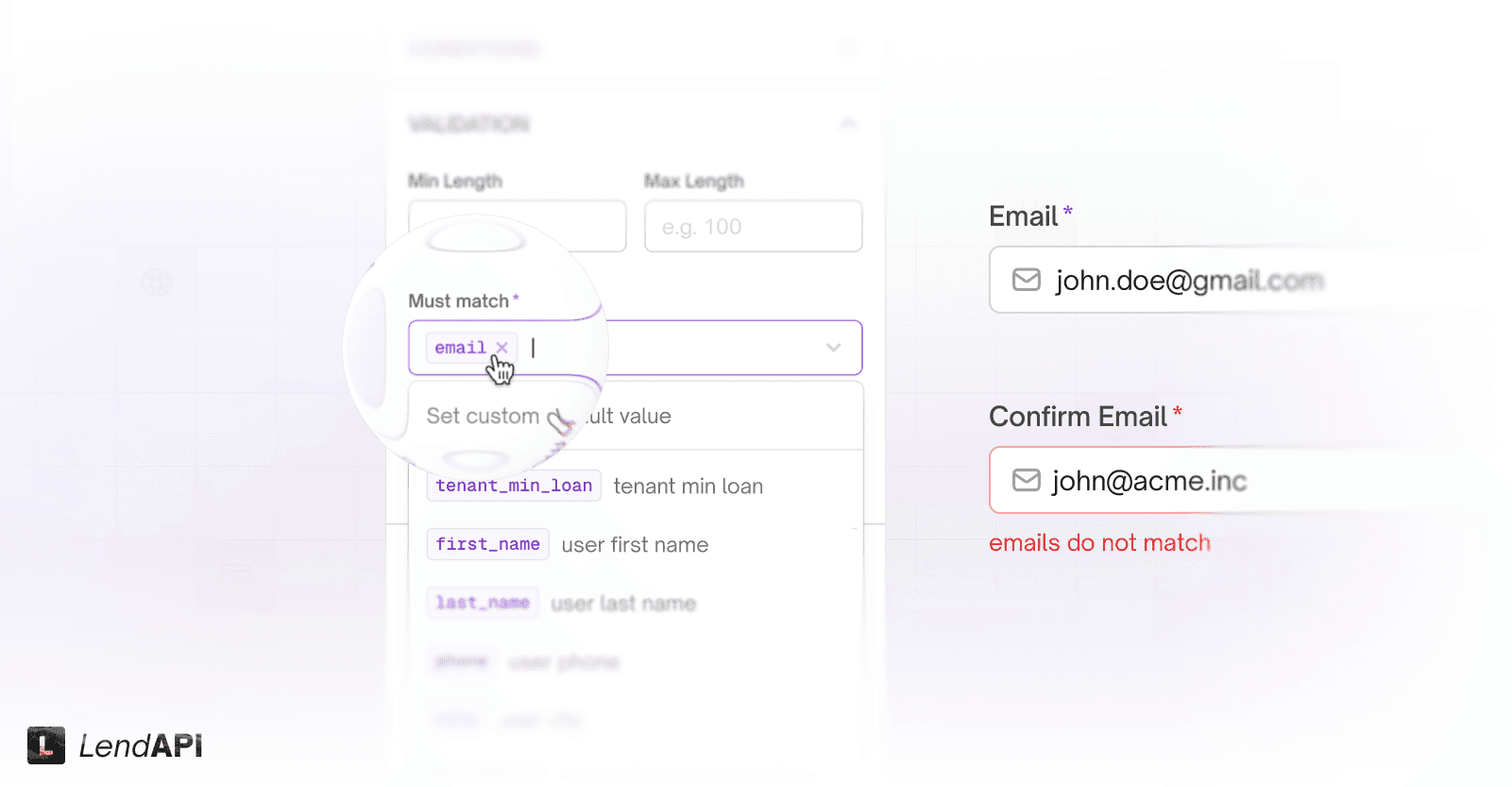
Validation rules in Product Studio now live in a single, unified framework across String, Number, Boolean, Date, and List fields. Each type exposes a clear set of options—Min/Max Length, Min/Max Value, Must Match, Pattern, and Error Message—and most of these can be configured as either static values or variable references that resolve at runtime.
The highlight is Must Match, which turns common patterns like confirm email, confirm password, and confirm SSN into first‑class configuration instead of custom logic. You select which field (or tenant variable) the value must match, optionally customize the error message, and the wizard automatically blocks “Continue” until both values align. Must Match composes with Pattern validation, so you can enforce a valid format and a matching confirmation in a single field configuration.
Improvement: Present offers in list view
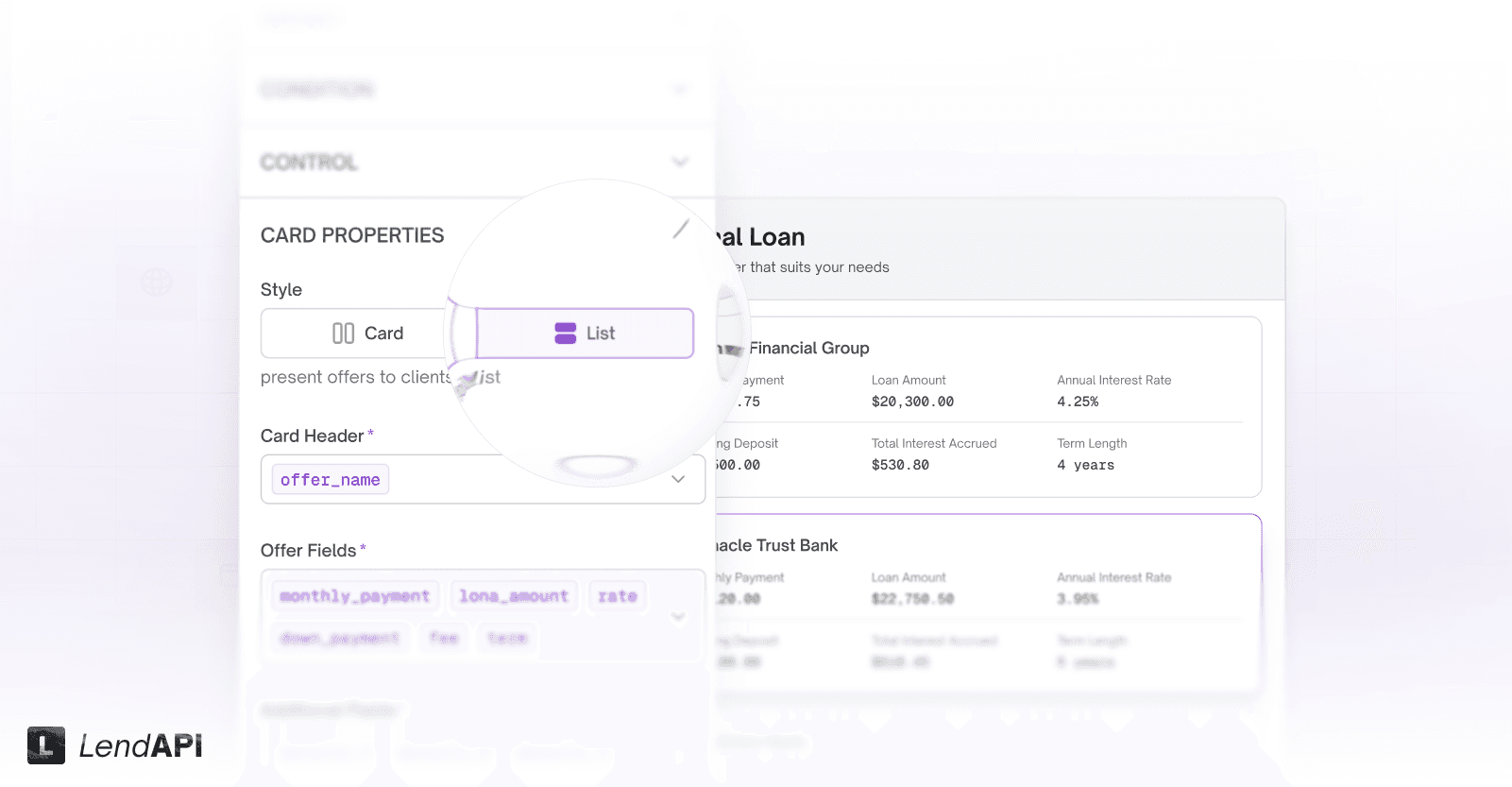
The Offer Card widget now supports a List display style in addition to the existing Card layout. Card remains great for a small number of offers; List stacks offers vertically and works better when you’re showing three or more options or more complex terms. Both styles share the same configuration—Header, up to six key fields, optional additional details, and a fallback message—with the same explicit‑selection pattern (no auto‑select, even for single‑offer responses).
Contracts that line up perfectly, end-to-end
Native DocuSign PDF attribute mapping
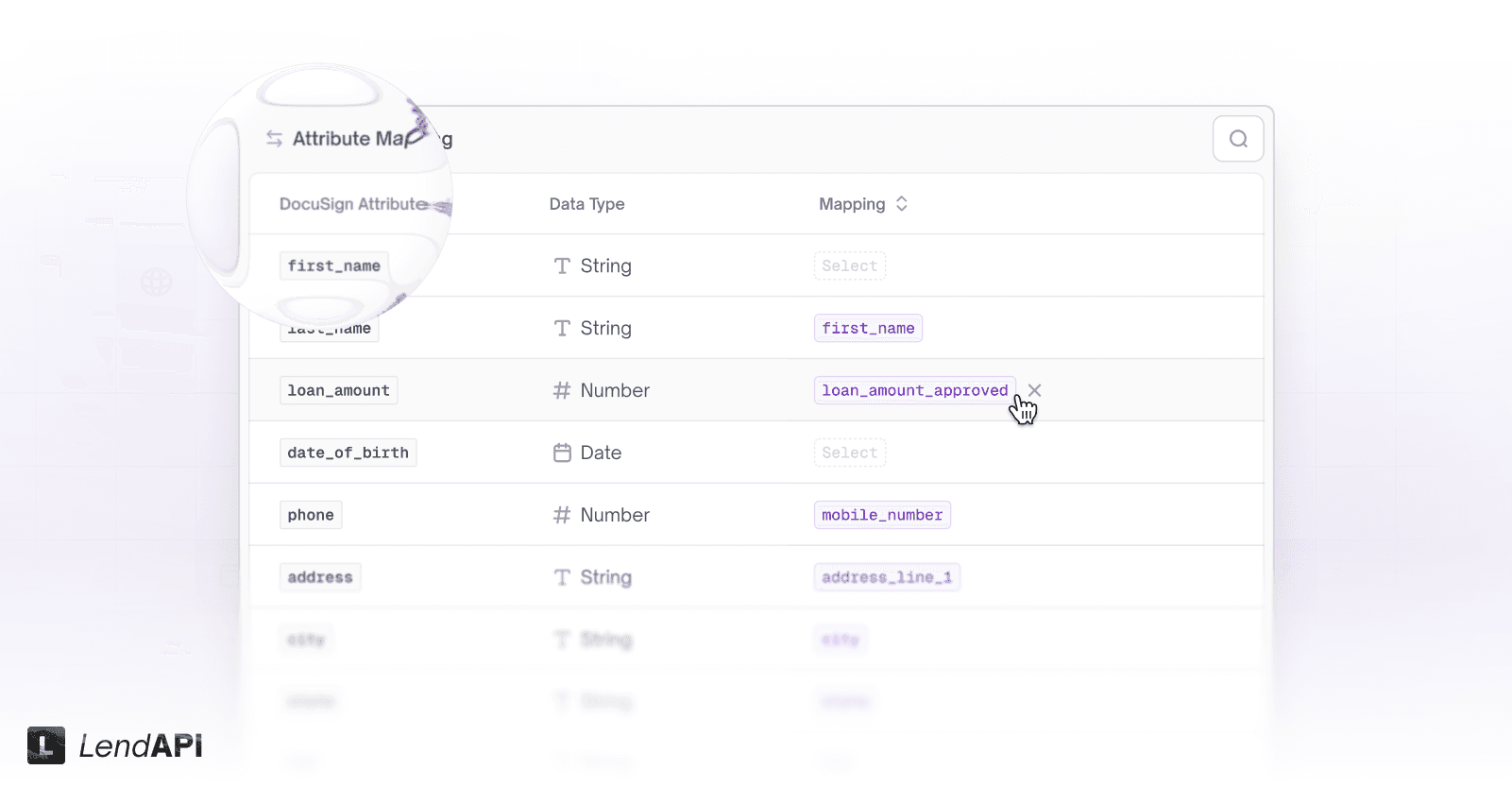
For tenants using DocuSign, Contract Builder now includes a new Attribute Mapping tab so you can map DocuSign PDF fields directly to LendAPI variables. Once a template is mapped, LendAPI automatically populates all the merge fields when the contract is sent—no per‑contract scripts or manual field wiring.
The new experience includes:
Search across PDF fields that remains fast even on large templates like the 1003.
Categorized variable picker with separate groups for applicant and businesses.
Ability to save partial work, so you do not have to map hundreds of fields in one sitting.
Warnings panel that flags unmapped critical fields, type mismatches, and stale variables before you ship.
Under the hood, we also sped up contract PDF generation and contract save paths, so signed documents render more quickly, and edits feel more responsive.
Better webhooks and platform hygiene
A few more highlights that round out v3.2.0:
Product‑level webhooks – You can now attach webhooks to specific products, falling back to tenant‑level webhooks when none is configured. This makes it easier to route different products to different downstream systems or payloads without duplicating tenants.
Multi‑tab email triggers – Email templates tied to product tabs can now fire from multiple tabs in a single configuration, reducing template duplication for similar journeys.
We also shipped a long list of behind‑the‑scenes improvements—faster signed‑contract generation, safer user deletion behavior, more resilient background jobs, and stability fixes across third‑party integrations like USIO, Truvalidate, TransUnion joint pulls, PSCU, and Google Address Validation. On top of that, a full sweep through Product Studio, Rule Studio, Contracts, SMS templates, theme settings, application details, and the agent dashboard calendar addressed a wide range of small but meaningful bugs.
About LendAPI
LendAPI is the core infrastructure for embedded finance, known as one of the fastest-growing embedded finance infrastructure companies in the world. Since its inception in 2024, the platform has provided market leadership in indirect financing across industries ranging from automotive and marine equipment to luxury consumer goods and services. Our technology enables a variety of indirect lending scenarios, delivering millions of financing opportunities for banks, credit unions, retailers, and fintechs. LendAPI provides a complete, private-labeled solution, from customer experience and administrative tools (including in-store co-pilots) to loan servicing, compliance, and licensing support, to launch in-house BNPL products quickly and efficiently.